
Descripción del Producto
Descripción del Producto
Main Materials:
1)housing:aluminium alloy ADC12(size 571-090); die cast iron HT200(size 110-150);
2)Worm:20Cr, ZI Involute profile; carbonize&quencher heat treatment make gear surface hardness up to 56-62 HRC; After precision grinding, carburization layer’s thickness between 0.3-0.5mm.
3)Worm Wheel:wearable stannum alloy CuSn10-1
Detailed Photos
Combination Options:
Input:with input shaft, With square flange,With IEC standard input flange
Output:with torque arm, output flange, single output shaft, double output shaft, plastic cover
Worm reducers are available with diffferent combinations: NMRV+NMRV, NMRV+NRV, NMRV+PC, NMRV+UDL, NMRV+MOTORS
Exploded View:
Product Parameters
| Old Model |
New Model | Ratio | Center Distance | Power | Input Dia. | Output Dia. | Output Torque | Weight |
| RV571 | 7.5~100 | 25mm | 0.06KW~0.12KW | Φ9 | Φ11 | 21N.m | 0.7kgs | |
| RV030 | RW030 | 7.5~100 | 30mm | 0.06KW~0.25KW | Φ9(Φ11) | Φ14 | 45N.m | 1.2kgs |
| RV040 | RW040 | 7.5~100 | 40mm | 0.09KW~0.55KW | Φ9(Φ11,Φ14) | Φ18(Φ19) | 84N.m | 2.3kgs |
| RV050 | RW050 | 7.5~100 | 50mm | 0.12KW~1.5KW | Φ11(Φ14,Φ19) | Φ25(Φ24) | 160N.m | 3.5kgs |
| RV063 | RW063 | 7.5~100 | 63mm | 0.18KW~2.2KW | Φ14(Φ19,Φ24) | Φ25(Φ28) | 230N.m | 6.2kgs |
| RV075 | RW075 | 7.5~100 | 75mm | 0.25KW~4.0KW | Φ14(Φ19,Φ24,Φ28) | Φ28(Φ35) | 410N.m | 9.0kgs |
| RV090 | RW090 | 7.5~100 | 90mm | 0.37KW~4.0KW | Φ19(Φ24,Φ28) | Φ35(Φ38) | 725N.m | 13.0kgs |
| RV110 | RW110 | 7.5~100 | 110mm | 0.55KW~7.5KW | Φ19(Φ24,Φ28,Φ38) | Φ42 | 1050N.m | 35.0kgs |
| RV130 | RW130 | 7.5~100 | 130mm | 0.75KW~7.5KW | Φ24(Φ28,Φ38) | Φ45 | 1550N.m | 48.0kgs |
| RV150 | RW150 | 7.5~100 | 150mm | 2.2KW~15KW | Φ28(Φ38,Φ42) | Φ50 | 84.0kgs |
GMRV Outline Dimension:
| GMRV | A | B | C | C1 | D(H8) | E(h8) | F | G | G1 | H | H1 | I | M | N | O | P | Q | R | S | T | BL | β | b | t | V |
| 030 | 80 | 97 | 54 | 44 | 14 | 55 | 32 | 56 | 63 | 65 | 29 | 55 | 40 | 57 | 30 | 75 | 44 | 6.5 | 21 | 5.5 | M6*10(n=4) | 0° | 5 | 16.3 | 27 |
| 040 | 100 | 121.5 | 70 | 60 | 18(19) | 60 | 43 | 71 | 78 | 75 | 36.5 | 70 | 50 | 71.5 | 40 | 87 | 55 | 6.5 | 26 | 6.5 | M6*10(n=4) | 45° | 6 | 20.8(21.8) | 35 |
| 050 | 120 | 144 | 80 | 70 | 25(24) | 70 | 49 | 85 | 92 | 85 | 43.5 | 80 | 60 | 84 | 50 | 100 | 64 | 8.5 | 30 | 7 | M8*12(n=4) | 45° | 8 | 28.3(27.3) | 40 |
| 063 | 144 | 174 | 100 | 85 | 25(28) | 80 | 67 | 103 | 112 | 95 | 53 | 95 | 72 | 102 | 63 | 110 | 80 | 8.5 | 36 | 8 | M8*12(n=8) | 45° | 8 | 28.3(31.3) | 50 |
| 075 | 172 | 205 | 120 | 90 | 28(35) | 95 | 72 | 112 | 120 | 115 | 57 | 112.5 | 86 | 119 | 75 | 140 | 93 | 11 | 40 | 10 | M8*14(n=8) | 45° | 8(10) | 31.3(38.3) | 60 |
| 090 | 206 | 238 | 140 | 100 | 35(38) | 110 | 74 | 130 | 140 | 130 | 67 | 129.5 | 103 | 135 | 90 | 160 | 102 | 13 | 45 | 11 | M10*16(n=8) | 45° | 10 | 38.3(41.3) | 70 |
| 110 | 255 | 295 | 170 | 115 | 42 | 130 | – | 144 | 155 | 165 | 74 | 160 | 127.5 | 167.5 | 110 | 200 | 125 | 14 | 50 | 14 | M10*18(n=8) | 45° | 12 | 45.3 | 85 |
| 130 | 293 | 335 | 200 | 120 | 45 | 180 | – | 155 | 170 | 215 | 81 | 179 | 146.5 | 187.5 | 130 | 250 | 140 | 16 | 60 | 15 | M12*20(n=8) | 45° | 14 | 48.8 | 100 |
| 150 | 340 | 400 | 240 | 145 | 50 | 180 | – | 185 | 200 | 215 | 96 | 210 | 170 | 230 | 150 | 250 | 180 | 18 | 72.5 | 18 | M12*22(n=8) | 45° | 14 | 53.8 | 120 |
Perfil de la empresa
About CZPT Transmission:
We are a professional reducer manufacturer located in HangZhou, ZHangZhoug province.
Our leading products is full range of RV571-150 worm reducers , also supplied GKM hypoid helical gearbox, GRC inline helical gearbox, PC units, UDL Variators and AC Motors, G3 helical gear motor.
With fast delivery, superior after-sales service, advanced producing facility, our products sell well both at home and abroad. We have exported our reducers to Southeast Asia, Eastern Europe and Middle East and so on.Our aim is to develop and innovate on basis of high quality, and create a good reputation for reducers.
Packing information:Plastic Bags+Cartons+Wooden Cases , or on request
We participate Germany Hannver Exhibition-ZheJiang PTC Fair-Turkey Win Eurasia
Logistics
After Sales Service
1.Maintenance Time and Warranty:Within 1 year after receiving goods.
2.Other Service: Including modeling selection guide, installation guide, and problem resolution guide, etc.
FAQ
1.Q:Can you make as per customer drawing?
A: Yes, we offer customized service for customers accordingly. We can use customer’s nameplate for gearboxes.
2.Q:What is your terms of payment ?
A: 30% deposit before production,balance T/T before delivery.
3.Q:Are you a trading company or manufacturer?
A:We are a manufacurer with advanced equipment and experienced workers.
4.Q:What’s your production capacity?
A:8000-9000 PCS/MONTH
5.Q:Free sample is available or not?
A:Yes, we can supply free sample if customer agree to pay for the courier cost
6.Q:Do you have any certificate?
A:Yes, we have CE certificate and SGS certificate report.
Contact information:
Ms Lingel Pan
For any questions just feel free ton contact me. Many thanks for your kind attention to our company!
| Solicitud: | Motor, Machinery, Marine, Agricultural Machinery, Industry |
|---|---|
| Función: | Distribution Power, Change Drive Torque, Change Drive Direction, Speed Changing, Speed Reduction |
| Disposición: | Right Angle |
| Dureza: | Superficie dentada endurecida |
| Instalación: | Tipo horizontal |
| Paso: | Doble paso |
| Samples: |
US$ 0/Piece
1 Piece(Min.Order) | |
|---|
| Personalización: |
Disponible
| Solicitud personalizada |
|---|
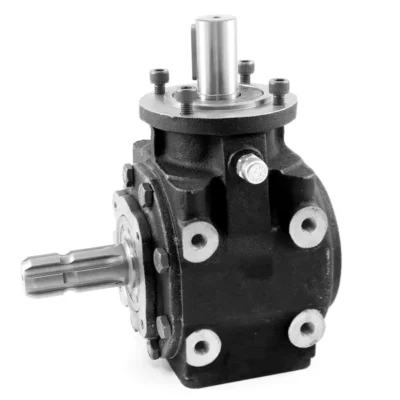
Adjusting Tension on a Mower Gearbox Belt
Proper tension adjustment of the gearbox belt in your mower is crucial for optimal performance and belt longevity. Follow these steps to adjust the tension:
- Preparation: Turn off the mower’s engine and disconnect the spark plug wire to ensure safety.
- Locate the Adjustment Mechanism: Identify the tension adjustment mechanism on the mower. This could be a tensioning bolt, an adjustable bracket, or another mechanism depending on the mower model.
- Loosen Bolts: If your mower has tensioning bolts, slightly loosen the mounting bolts securing the gearbox in place. This allows the gearbox to move and adjust tension.
- Adjust Tension: Use the tension adjustment mechanism to increase or decrease the tension on the belt. Refer to your mower’s manual for recommended tension specifications.
- Check Tension: After adjusting, check the tension by pressing down on the belt at a midpoint between the pulleys. The belt should give a little, but not excessively. Also, check for proper alignment of the pulleys.
- Tighten Bolts: Once the tension is set correctly, tighten the mounting bolts of the gearbox to secure it in place.
- Test Operation: Reconnect the spark plug wire and start the mower to observe the belt’s operation. Listen for any unusual noises and monitor the belt for proper engagement with the pulleys.
Regularly checking and adjusting the tension of the gearbox belt ensures efficient power transmission and prevents premature wear. If you’re unsure about the proper tension adjustment, consult your mower’s manual or seek assistance from a professional.
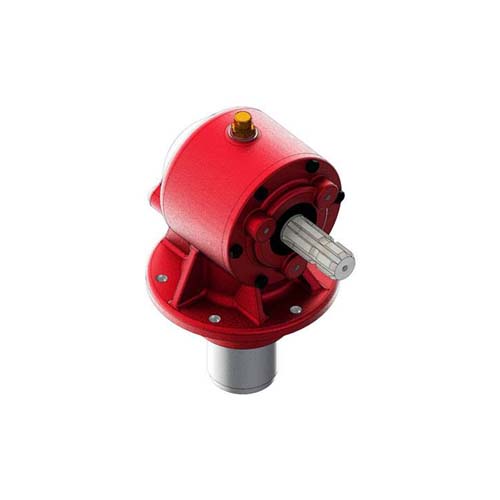
Differences between Manual and Automatic Mower Gearboxes
Manual and automatic mower gearboxes differ in their operation, control, and convenience:
- Operación: Manual gearboxes require the user to engage and disengage gears manually using a clutch or lever. Automatic gearboxes, on the other hand, change gears automatically based on speed and load conditions.
- Control: Manual gearboxes provide more direct control over gear selection, allowing the user to choose the appropriate gear for specific tasks. Automatic gearboxes, however, offer a hands-free experience with gear changes managed by the gearbox itself.
- Convenience: Automatic gearboxes are more convenient for users who prefer a hassle-free experience. They eliminate the need to manually shift gears, making operation simpler and more user-friendly.
- Complexity: Automatic gearboxes are more complex in design compared to manual ones due to the presence of sensors, electronic controls, and additional components required for automatic shifting.
- Efficiency: Manual gearboxes can provide better control over power delivery and may be more efficient in certain situations. However, automatic gearboxes optimize gear changes for fuel efficiency and performance.
- Cost: Automatic gearboxes are generally more expensive to manufacture and repair due to their complexity. Manual gearboxes are simpler and often more affordable.
The choice between manual and automatic mower gearboxes depends on user preference, the level of control desired, and the intended use of the mower. Both types have their advantages and disadvantages, and the decision should be based on the user’s needs and priorities.
Función de la caja de cambios de una segadora
La caja de engranajes de una segadora funciona mediante una serie de engranajes y componentes que trabajan en conjunto para transmitir potencia y convertir el movimiento de rotación del motor en la acción de corte de las cuchillas. Así es como funciona una caja de engranajes típica de una segadora:
- Entrada de alimentación: La caja de cambios del cortacésped recibe potencia del motor del cortacésped a través de un eje de transmisión.
- Reducción de engranajes: La caja de cambios contiene un conjunto de engranajes dispuestos en relaciones específicas para lograr la conversión de par y velocidad requerida. El engranaje de entrada, conectado al eje de transmisión, engrana con uno o más engranajes intermedios.
- Conversión de par: Al girar el engranaje de entrada, este acciona los engranajes intermedios. La disposición de los engranajes dentro de la caja de cambios produce una reducción de la velocidad y un aumento del par motor. Esto es fundamental para que las cuchillas de corte tengan la fuerza necesaria para cortar la vegetación.
- Conexión de la hoja: El eje de salida de la caja de engranajes está conectado a las cuchillas de corte. A medida que el eje de salida de la caja de engranajes gira, transfiere el par a las cuchillas, provocando que estas giren.
- Rotación de la pala: El movimiento de rotación de las cuchillas es lo que les permite cortar el césped y otra vegetación. El mayor par motor generado por la caja de engranajes permite que las cuchillas realicen eficazmente las funciones de corte o trituración.
Las cajas de engranajes de las segadoras modernas están diseñadas para ofrecer eficiencia, durabilidad y precisión. Suelen estar equipadas con rodamientos de bolas, sellos y lubricación para minimizar la fricción y garantizar un funcionamiento suave. Algunas también incluyen funciones adicionales como altura de corte ajustable, sincronización de cuchillas y control direccional para aumentar la versatilidad de la segadora.


editor by CX 2023-09-06


