
High-Performance Agricultural Gearbox for Stone Burier Applications
Your stone burier depends on a gearbox that can translate raw PTO power into productive soil preparation force — reliably, efficiently, and without unexpected failure. That is exactly what our Stone Burier agricultural gearbox delivers. Mounted centrally on the stone burier frame, this gearbox powers the rotor that lifts soil and rocks, sifts them through a rear screen, and buries stones below the surface while leaving a smooth, stone-free seedbed on top.
We engineer each gearbox specifically for the mechanical profile of soil preparation. The gear geometry, bearing selection, and housing design are all optimized for the load patterns, duty cycles, and environmental exposures unique to stone burier operations across Australian farming conditions.
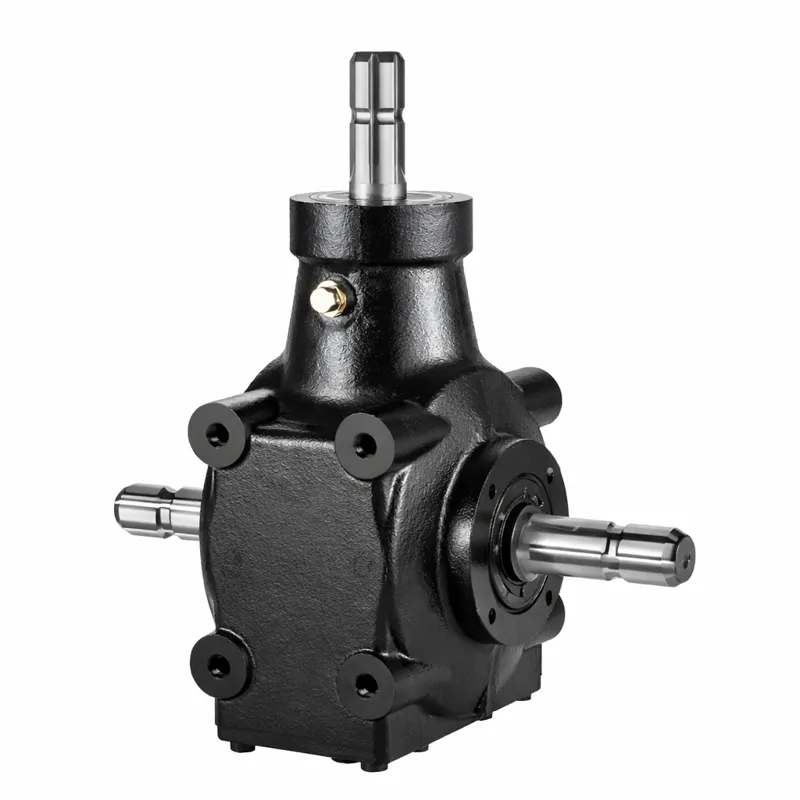
⚙ Stone Burier Gearbox — Engineering Data Sheet
Le tableau suivant présente les principaux paramètres d'ingénierie de notre agricultural stone burier gearboxChaque spécification mentionnée peut être modifiée grâce à notre service de fabrication sur mesure.
| Spécification | Valeur nominale | Personnalisation |
|---|---|---|
| Number of Gear Stages | 1 | Multi-stage for high ratios |
| Ventilation / Orifice de ventilation | Screw-in breather cap | Types tout temps |
| Dureté de la surface des engrenages | HRC 57 – 65 | Carburé + rectifié |
| Type de bouchon de vidange | Quick-drain valve | Option de port d'échantillonnage |
| Gear Face Width | 50 mm | Wider for high-torque |
| Maximum Input Torque | 200 Nm | With overload protection |
| Diamètre de l'arbre de sortie | 55 mm | Correspondance pour implémenter le couplage |
| Input Shaft Spline | 6-spline (1-3/8″) / 21-spline (1-3/4″) | 20-spline, 8-spline on request |
| Module / Diametral Pitch | M5 | Finer/coarser modules available |
| Ambient Temperature Range | -25°C to +95°C | Arctic / tropical variants |
| Capacité pétrolière | 1.9 litres | cuve surdimensionnée disponible |
| Surface Coating | E-coat + powder coat | Custom RAL colours available |
| Rated Power Capacity | 20 – 250 HP (15-186 kW) | Higher ratings available |
| Dureté du noyau d'engrenage | HRC 28 | Noyau robuste absorbant les chocs |
| Sens de rotation | Bidirectionnel | Modèles réversibles |
| Primary Gear Type | Crown Gears | Custom tooth profiles on request |
| Matériau du boîtier | Spheroidal Graphite Iron | Améliorations matérielles optionnelles |
| Norme de conception | AGMA 2001-D04 | certifié par un tiers |
| Maximum Continuous Torque | 100 – 1200 Nm | Peak torque: 150% of continuous |
| Centre Distance | 75 mm | Per gear ratio |
Contactez-nous équipe d'ingénierie for a detailed specification sheet tailored to your stone burier model and soil preparation conditions.
🏆 Performance Advantages — Why Our Stone Burier Gearbox Leads the Field
We believe in transparency. These are the specific, verifiable differences between our Stone Burier gear drive and low-cost alternatives:
| Comparison Point | Generic Aftermarket | Our Stone Burier Gear Drive |
|---|---|---|
| Bearing Specification | Recycled bearings, inconsistent quality | Premium tapered roller bearings, precision pre-loaded, 10,000-hr L10 life |
| Bruit et vibrations | Significant tonal noise from poor gear mesh | Balanced rotating assembly, vibration below 2.5 mm/s RMS |
| Durée de vie prévue | 500-1,000 hours — frequent replacement needed | 5,000-8,000 hours demonstrated in Australian commercial operations |
| Matériaux et traitement des engrenages | Grey iron gears, no heat treatment | 18CrNiMo7-6 aerospace-grade steel, shot-peened root fillets for fatigue life |
| Spare Parts | No individual parts — must buy complete gearbox | Full inventory, ships 24-48 hours |
| Warranty & Support | 12-month warranty excludes seals and bearings | Full 2-year warranty + engineer hotline + install support |
| Sealing System | Single-lip NBR rubber seal, no dust excluder | Cassette-type metal-cased seal with integrated dirt rejection lip |
Chaque dollar investi dans une boîte de vitesses haut de gamme rapporte plusieurs dollars en réparations évitées et en préservation de la valeur des récoltes. Demander une analyse du retour sur investissement pour votre opération.
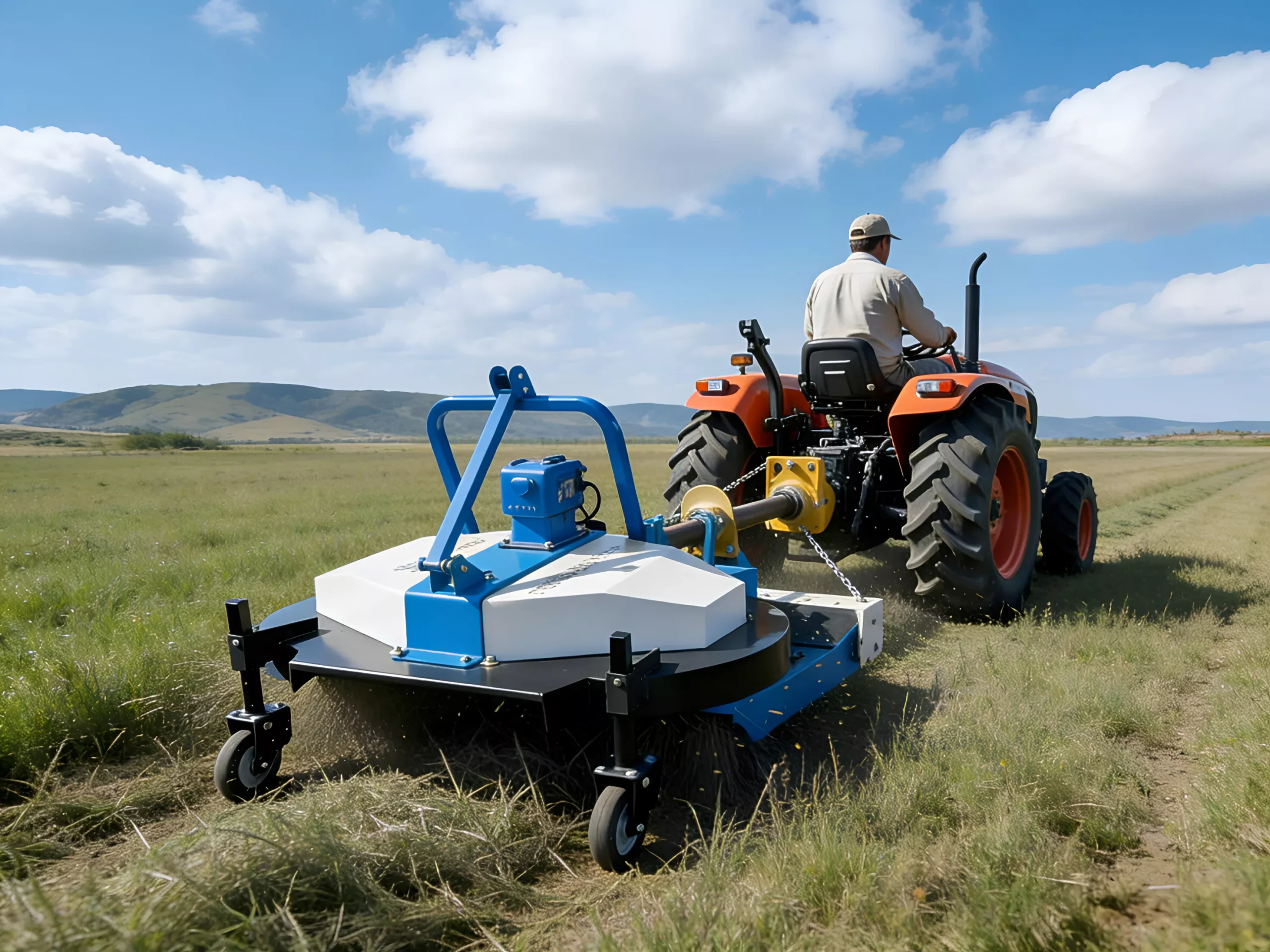
⚙ From PTO to Screening Rotor — Stone Burier Gearbox Anatomy
The Stone Burier gearbox operation can be understood through four interconnected systems:
1 — Input System: Your tractor’s PTO shaft engages with the gearbox through a hardened splined input shaft. The interface transmits torque while allowing minor angular misalignment. Inside, spherical roller bearings support the input shaft and manage the combined loading of transmitted torque and driveline forces.
2 — Conversion System: Precision crown gears inside the gearbox reduce PTO speed while multiplying torque to match the screening rotor’s demands. Mounted centrally on the stone burier frame, this gearbox powers the rotor that lifts soil and rocks, sifts them through a rear screen, and buries stones below the surface while leaving a smooth, stone-free seedbed on top. The gears are manufactured from carburized alloy steel, ground to tight tolerances, and profiled for quiet, efficient power transfer.
3 — Output System: The transformed power exits through the output shaft to the stone burier’s working mechanism, specifically driving the screening rotor for core soil preparation function. The output connection is engineered for vibration-free, backlash-free transmission at the point of work.
4 — Protection System: Every shaft penetration is protected by a labyrinth seal, creating multi-barrier defense against dust, moisture, and crop debris. synthetic PAO 75W-90 provides continuous splash lubrication. The grey cast iron housing features integrated cooling fins for thermal management.
✅ Stone Burier Gearbox — Brand-by-Brand Compatibility
Brand references are provided solely to assist customers in identifying compatible replacement gearboxes. All trademarks belong to their respective holders.
Notre Stone Burier gearbox directly replaces the factory gear drive on the following stone burier brands:
Model 2839, Series 808
✅ Compatible
837T, G3.3
✅ Compatible
E-701, Mk-IV
✅ Compatible
Mk-IV, Model 1328
✅ Compatible
A-574, Type 99E
✅ Compatible
Rebuild Kits & Parts
🔎 Buyer’s Checklist — Stone Burier Gearbox Selection Made Simple
Use this step-by-step guide to identify the exact gearbox model for your stone burier. Click each step for detailed instructions.
💡 Conseil de pro : For fastest service, email us the old gearbox part number (if visible), your tractor brand and model, and your stone burier manufacturer and model. Our engineers will confirm the exact match and provide a quotation within one business day.
🛠 Installation Procedure for Your Stone Burier Gearbox
This guide covers the complete process of replacing the gearbox on your stone burier. Each step includes specific details for soil preparation equipment — follow them in sequence for best results.
Step 1 — Connect Output to screening rotor
Connect the output coupling to the screening rotor drive on your stone burier. Ensure the shaft engagement depth meets the minimum specified in the manual. Tighten all retaining hardware to the correct torque value. After connection, rotate the output by hand to verify smooth, unrestricted movement.
Step 2 — Post-Installation Checks (10-Hour Service)
Perform a 10-hour service: re-check mounting bolt torque, inspect for leaks, verify oil level, and confirm the PTO safety guard is in place. Clean any accumulated debris from the gearbox housing to maintain effective heat dissipation. Log the installation details in your equipment maintenance records.
Step 3 — Fill With Lubricant
Add gear oil through the fill port. Use the grade recommended in the installation manual. Fill until oil just begins to weep from the level check hole (if provided) or reaches the bottom of the fill port. Wipe any spilled oil from the housing. Confirm the magnetic drain plug is fully seated.
Step 4 — Remove Old Gearbox
Detach the driveline yoke from the gearbox input. If the gearbox also has an output coupling to the screening rotor, disconnect that as well. Support the gearbox from below with a hydraulic jack. Remove the mounting fasteners progressively, keeping at least two bolts finger-tight until you are ready to slide the unit out.
Step 5 — Test Run & Break-In
With the stone burier raised or in a safe test position, start the PTO at idle speed. Observe the gearbox for any vibration, unusual noise, or oil seepage. Run for 20 minutes at reduced speed. If all is normal, increase to the operating PTO speed and run for an additional 10 minutes while monitoring temperature. Re-check all mountings.
Step 6 — Connect PTO Driveline
Slide the PTO driveline yoke over the gearbox input spline. Ensure full engagement — the yoke should slide past the retaining groove and click into place. Test the engagement by pulling firmly on the yoke; it should not detach. Verify that the driveline length allows adequate telescoping stroke throughout the full range of implement movement.
Step 7 — Prepare the Mounting Surface
Scrape any old gasket material or RTV sealant from the stone burier’s gearbox mounting face. Use a flat file to remove any burrs around bolt holes. Verify all mounting holes align correctly by test-fitting the new gearbox without bolts. Check for flatness — a feeler gauge should show less than 0.1mm across the mounting surface.
⚠ Important : For safety, never work under unsupported equipment. Use proper lifting devices when handling the gearbox unit.
⚠ Fault Diagnosis Guide — Stone Burier Gearbox
Even the best-engineered gearbox may encounter operational issues over its service life. This guide covers the most common symptoms reported with stone burier gearboxes and provides actionable field solutions.
⚠ Fuite d'huile au niveau des joints d'arbre
Likely cause: Un niveau d'huile trop élevé crée une pression interne excessive.
What to do: Inspect the breather cap — a blocked breather pressurizes the housing and forces oil past seals. Replace the breather and clean any debris. If leaking continues, replace the affected seal. Check the shaft surface under the seal for grooves or corrosion that may be cutting the seal lip.
⚠ Vibrations excessives pendant le fonctionnement
Likely cause: Joints de cardan usés dans la transmission
What to do: Vibration in a stone burier gearbox system usually originates from the driveline, not the gearbox itself. Inspect the PTO shaft U-joints — a worn joint creates a twice-per-revolution vibration pulse. Confirm the driveline is the correct length for the tractor-to-implement distance. Re-torque the gearbox mounting bolts.
⚠ Bruit de grincement ou de sifflement anormal
Likely cause: Lubrifiant insuffisant ou huile de qualité inadéquate
What to do: Check oil level immediately — low oil is the most common cause of gear noise in stone burier gearboxes. If oil level is correct, the lubricant may have degraded — perform a complete oil change. Persistent noise indicates internal wear requiring professional assessment.
⚠ Surchauffe excessive de la boîte de vitesses
Likely cause: Fonctionnement au-delà de la puissance nominale ou du cycle de service
What to do: Measure housing temperature (normal operating range: 40-80°C depending on ambient temperature). If consistently above 90°C, verify oil volume, clean the housing, and check that the gear ratio produces the correct output speed. An incorrect ratio forces the gearbox to work harder, generating excess heat.
⚠ Output Shaft Stops Turning While Input Rotates
Likely cause: Stripped gear teeth or broken gear
What to do: If the gearbox has a shear pin or slip clutch, inspect it for activation. A tripped overload device is a protective event, not a failure — replace the pin and investigate what caused the overload. If the overload device is intact but no output is produced, internal gear or shaft failure has occurred.
For persistent or complex issues, our engineers provide remote diagnostic support via phone and email. We can also supply rebuild kits for in-workshop repairs. Reach our support team here.
📍 Real-World Performance — Stone Burier Gearbox Across Australia
Our agricultural gearboxes are field-proven across every Australian state and territory. Below are documented case studies from recent Stone Burier gearbox installations.
Bruce Campbell — Tamworth, NSW
Opération: family-run farming operation | Taille: 3000 acres | Utiliser: Stone Burier gearbox for soil preparation
Motif de l'achat : New equipment build — specifying aftermarket gearbox as OEM improvement
“We operate in a region with heavy red soil and corrosion has been a persistent problem with gearboxes. The coating on this unit is noticeably more robust — no rust after 2 full seasons of outdoor storage.”
📍 Case #3: Narrabri, NSW
| Client: | George Barker — mixed farming enterprise |
| Emplacement: | Narrabri, NSW |
| Taille de l'exploitation : | 1200 acres |
| Application: | Stone Burier gearbox for stone burier — soil preparation |
| Motif de l'achat : | Emergency mid-season replacement after catastrophic original gearbox failure |
“We stress-test our equipment in ways that would void most warranties. This gearbox has handled everything we’ve thrown at it — heavy clay soils — without complaint.”
— George Barker, Narrabri, NSW
Wayne Crawford — Wagga Wagga, NSW
Opération: broadacre cropping operation | Taille: 1500 acres | Utiliser: Stone Burier gearbox for soil preparation
Motif de l'achat : Retrofit older model stone burier with improved gearbox for extended service life
“Installed as a replacement for a gearbox that catastrophically failed mid-season. The MowerGearbox unit was delivered within 5 days and fitted perfectly. We finished the season without further issues. Very impressed.”


