
Descripción del Producto
Descripción del Producto
NB142 series adopts the design of integrating its sun gear and input shaft, the design of integrating its output structure. Using high- strength bearing, the product itself is characterized by high load, high precision, and low noise, focusing on the use of automation equipment, various types of packaging, printing, lithium-ion, LCD screens, robots, palletizers, woodworking, doors and windows and other industry sectors.
Product Name: High Precision Planetary Gearbox
Product Series: NB142 Series
Product features: high precision, high load, low noise.
Product Description:
Integrated design concept with high strength bearings ensure the product itself is durable and efficient
A variety of output ideas such as shaft output, flange and gear are available.
1 arc minute ≤ backlash ≤ 3 arc minutes
Reduction ratios ranging from 3 to 100
Frame design: increases torque and optimises power transmission
Optimised selection of oil seals: reduces friction and laminate transmission efficiency
Protection class IP65
Warranty: 2 years
Our Advantages
High precision
High load
Low noise
Fotos detalladas
Product Parameters
| Segment number | Single segment | ||||||||
| Ratio | i | 3 | 4 | 5 | 6 | 7 | 8 | 9 | 10 |
| Rated output torque | Nm | 320 | 510 | 610 | 570 | 520 | 470 | 420 | 420 |
| Emergency stop torque | Nm | Three times of Maximum Output Torque | |||||||
| Rated input speed | Rpm | 3000 | |||||||
| Max input speed | Rpm | 6000 | |||||||
| Ultraprecise backlash | arcmin | ≤1 | |||||||
| Precision backlash | arcmin | ≤3 | |||||||
| Standard backlash | arcmin | ≤5 | |||||||
| Torsional rigidity | Nm/arcmin | 50 | |||||||
| Max.bending moment | Nm | 9400 | |||||||
| Max.axial force | N | 4700 | |||||||
| Service life | hr | 20000(10000 under continuous operation) | |||||||
| Efficiency | % | ≥97% | |||||||
| Weight | kg | 14.5 | |||||||
| Operating Temperature | ºC | -10ºC~+90ºC | |||||||
| Lubricación | Synthetic grease | ||||||||
| Protection class | IP64 | ||||||||
| Mounting Position | All directions | ||||||||
| Noise level(N1=3000rpm,non-loaded) | dB(A) | ≤65 | |||||||
| Rotary inertia | Kg·cm² | 9.21 | 7.54 | 7.42 | 7.25 | 7.14 | 7.07 | 7.04 | 7.03 |
Applicable Industries
Packaging Machinery Mechanical Hand Textile Machinery
Non Standard automation Machine Tool Printing Equipment /* January 22, 2571 19:08:37 */!function(){function s(e,r){var a,o={};try{e&&e.split(“,”).forEach(function(e,t){e&&(a=e.match(/(.*?):(.*)$/))&&1
| Solicitud: | Motor, Machinery, Marine, Agricultural Machinery |
|---|---|
| Dureza: | Superficie dentada endurecida |
| Instalación: | All Direction |
| Disposición: | Planetary Gearbox |
| Forma del engranaje: | Helical Gear |
| Paso: | Single-Step |
| Personalización: |
Disponible
| Solicitud personalizada |
|---|
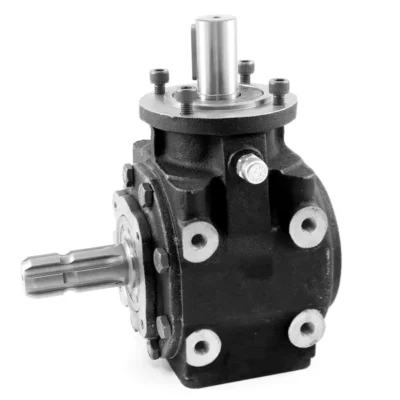
Adjusting Tension on a Mower Gearbox Belt
Proper tension adjustment of the gearbox belt in your mower is crucial for optimal performance and belt longevity. Follow these steps to adjust the tension:
- Preparation: Turn off the mower’s engine and disconnect the spark plug wire to ensure safety.
- Locate the Adjustment Mechanism: Identify the tension adjustment mechanism on the mower. This could be a tensioning bolt, an adjustable bracket, or another mechanism depending on the mower model.
- Loosen Bolts: If your mower has tensioning bolts, slightly loosen the mounting bolts securing the gearbox in place. This allows the gearbox to move and adjust tension.
- Adjust Tension: Use the tension adjustment mechanism to increase or decrease the tension on the belt. Refer to your mower’s manual for recommended tension specifications.
- Check Tension: After adjusting, check the tension by pressing down on the belt at a midpoint between the pulleys. The belt should give a little, but not excessively. Also, check for proper alignment of the pulleys.
- Tighten Bolts: Once the tension is set correctly, tighten the mounting bolts of the gearbox to secure it in place.
- Test Operation: Reconnect the spark plug wire and start the mower to observe the belt’s operation. Listen for any unusual noises and monitor the belt for proper engagement with the pulleys.
Regularly checking and adjusting the tension of the gearbox belt ensures efficient power transmission and prevents premature wear. If you’re unsure about the proper tension adjustment, consult your mower’s manual or seek assistance from a professional.
Using Synthetic Oil in Your Mower Gearbox
Yes, you can use synthetic oil in your mower gearbox, and in many cases, it’s recommended for its benefits. Synthetic oils offer several advantages over conventional oils:
- Improved Lubrication: Synthetic oils provide better lubrication, reducing friction and wear on gearbox components.
- Temperature Stability: Synthetic oils perform well in a wide range of temperatures, ensuring consistent lubrication in both hot and cold conditions.
- Resistance to Breakdown: Synthetic oils have a higher resistance to thermal breakdown, which helps them maintain their properties and effectiveness over time.
- Extended Oil Change Intervals: Synthetic oils often last longer than conventional oils, allowing for extended oil change intervals.
- Reduced Deposits: Synthetic oils tend to produce fewer deposits and sludge in the gearbox, keeping it cleaner.
Before switching to synthetic oil, it’s important to:
- Check the manufacturer’s recommendations: Confirm whether your mower’s gearbox is compatible with synthetic oil.
- Choose the right viscosity: Select a synthetic oil with the appropriate viscosity rating for your mower’s gearbox.
- Ensure proper mixing: If you’re switching from conventional to synthetic oil, it’s a good practice to thoroughly drain the old oil before adding the synthetic oil.
Using synthetic oil can contribute to the overall performance and longevity of your mower gearbox. However, always refer to your mower’s manual and the oil manufacturer’s recommendations for the best results.
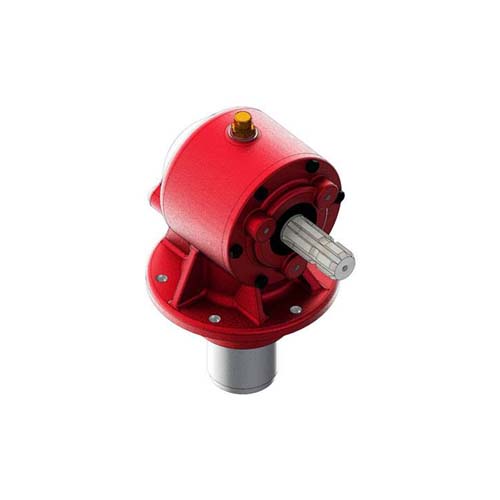
Función de la caja de cambios de una segadora
La caja de engranajes de una segadora funciona mediante una serie de engranajes y componentes que trabajan en conjunto para transmitir potencia y convertir el movimiento de rotación del motor en la acción de corte de las cuchillas. Así es como funciona una caja de engranajes típica de una segadora:
- Entrada de alimentación: La caja de cambios del cortacésped recibe potencia del motor del cortacésped a través de un eje de transmisión.
- Reducción de engranajes: La caja de cambios contiene un conjunto de engranajes dispuestos en relaciones específicas para lograr la conversión de par y velocidad requerida. El engranaje de entrada, conectado al eje de transmisión, engrana con uno o más engranajes intermedios.
- Conversión de par: Al girar el engranaje de entrada, este acciona los engranajes intermedios. La disposición de los engranajes dentro de la caja de cambios produce una reducción de la velocidad y un aumento del par motor. Esto es fundamental para que las cuchillas de corte tengan la fuerza necesaria para cortar la vegetación.
- Conexión de la hoja: El eje de salida de la caja de engranajes está conectado a las cuchillas de corte. A medida que el eje de salida de la caja de engranajes gira, transfiere el par a las cuchillas, provocando que estas giren.
- Rotación de la pala: El movimiento de rotación de las cuchillas es lo que les permite cortar el césped y otra vegetación. El mayor par motor generado por la caja de engranajes permite que las cuchillas realicen eficazmente las funciones de corte o trituración.
Las cajas de engranajes de las segadoras modernas están diseñadas para ofrecer eficiencia, durabilidad y precisión. Suelen estar equipadas con rodamientos de bolas, sellos y lubricación para minimizar la fricción y garantizar un funcionamiento suave. Algunas también incluyen funciones adicionales como altura de corte ajustable, sincronización de cuchillas y control direccional para aumentar la versatilidad de la segadora.


editor by CX 2024-04-30


